Monday, December 8, 2025

Astronomy


Astronomy

The word “astronomy” comes from two Greek words “Astron” (ἄστρον) meaning star and “Nomos” (νόμος) meaning law, order or study. So, astronomy means “the study of stars and heavenly bodies.” It is the study of the sun, moon, stars, planets and the universe.

In Greek mythology, the stars and heavenly bodies were believed to be gods, goddesses or heroes placed in the sky. The Greeks created many stories to explain the origin of stars and constellations.

In Greek mythology, Uranus was the god of the sky. He was the husband of Gaia, the Earth goddess. Uranus covered the Earth like a dome and the stars were believed to exist in his body. The Greeks believed the sky and stars were living parts of the universe controlled by divine powers. This shows their early interest in studying the sky, which later became astronomy.

One of the most famous star stories is about Orion, a great hunter. Orion was strong and proud. After his death, the gods placed him in the sky as a group of stars called the Orion constellation.

This was done to honour his strength and bravery. Even today, the Orion constellation can be seen in the night sky. This story shows how the Greeks connected stars with human stories.

The Greeks believed that the sun was controlled by Helios. Every day, Helios drove his golden chariot across the sky from east to west, bringing light to the world. This myth explained the movement of the sun across the sky. Today, astronomy studies the sun scientifically but the Greeks explained it through mythology.

Selene – The Moon Goddess

The moon was represented by Selene, the moon goddess. She travelled across the night sky in her chariot, bringing moonlight.

This shows the Greek interest in observing the moon and understanding the night sky.

The Greek word “astron” means star, and mythology explained stars as gods and heroes placed in the sky. The Greeks carefully observed the sky and created stories to explain:

  • Stars
  • Sun
  • Moon
  • Sky

These observations later became the science of astronomy.

The word “astronomy” comes from the Greek words “astron,” meaning star, and “nomos,” meaning study. Therefore, astronomy means the study of stars, planets, and the universe, and its origin comes from the Greek word “astron,” meaning star.

Friday, November 21, 2025

Origin of the Word “Nymph”

 The word “nymph” comes from the Greek word “nymphē” (νύμφη).

This word originally meant:

  • A young woman

  • A bride

  • A maiden (young girl)

In Greek mythology, the meaning developed into a beautiful female spirit of nature.

In Greek mythology, Nymphs were minor female deities who lived in natural places like:

  • Forests

  • Rivers

  • Mountains

  • Trees

  • Lakes

They were not as powerful as the major gods but they were immortal or very long-lived and closely connected to nature.

Different nymphs lived in different parts of nature:

  • Dryads – lived in trees

  • Naiads – lived in rivers and springs

  • Oreads – lived in mountains

Each nymph protected and represented her natural home.

A Story About Nymphs – Echo

One famous nymph is Echo.

Echo loved to talk and had a beautiful voice. But she once distracted Hera while Zeus escaped her notice. When Hera found out, she punished Echo.

Hera cursed Echo so that she could only repeat the last words spoken by others.

Later, Echo fell in love with a young man named Narcissus. But because of her curse, she could not speak her feelings properly. Narcissus rejected her and Echo slowly faded away until only her voice remained.

This story explains why we hear an “echo” in mountains and valleys.

Nymphs represent:

  • Beauty of nature

  • Youth and freshness

  • Harmony between humans and nature

They were seen as gentle and kind but also powerful in protecting their natural world.

Today, the word “nymph” can mean:

  • A beautiful young woman

  • A nature spirit (in literature)


Monday, November 3, 2025

Geology

 Geology


The word “geology” comes from two Greek words “Geo” meaning Earth,“Logos” meaning study or knowledge. So, geology means “the study of the Earth.” It is the study of the Earth’s structure, rocks, mountains, soil and how the Earth was formed and changed over time.

In Greek mythology, the Earth was not just a physical object. It was believed to be a living goddess called Gaia, who was the mother of everything on Earth.

In Greek mythology, Gaia was the goddess and personification of the Earth. She was one of the first beings to exist after Chaos. She represented the physical Earth itself-its land, soil, mountains and valleys.

Gaia gave birth to mountains, rivers, seas, and all natural features of the Earth. She also gave birth to the sky god Uranus, who covered the Earth.

Gaia was considered the mother of all living and non-living things on Earth. This shows the Greek understanding of Earth as the foundation of everything, which is the main focus of geology.

The Greeks also believed that earthquakes were caused by Poseidon, the god of the sea. Poseidon was also called the “Earth-shaker.” When Poseidon struck the ground with his trident, the Earth shook, causing earthquakes. This myth was an early way to explain changes in the Earth’s surface.

Today, geology explains earthquakes scientifically but in mythology, they were seen as actions of Poseidon.

Gaia provided land for plants to grow, animals to live and humans to build their homes. Mountains, rocks, soil and land were all parts of Gaia’s body. The Greeks respected Gaia because they believed the Earth supported all life. This idea connects directly to geology, which studies Earth and its physical structure.

The Greek word “geo” means Earth, and mythology explains Earth through the story of Gaia. Geology studies:

  • Earth’s structure
  • Rocks and mountains
  • Soil and land
  • Changes like earthquakes

These ideas were first explained through myths about Gaia and Poseidon.

In this way, the word “geology” comes from the Greek words “geo,” meaning Earth, and “logos,” meaning study. Therefore, geology means the study of the Earth and its origin comes from the Greek word “geo,” meaning Earth.

Thursday, October 9, 2025

Chemistry

 Chemistry

The word “chemistry” does not come directly from a Greek god’s name but it is closely connected to Greek ideas about change, transformation and the nature of matter. The word developed from the Greek word “khēmeia”, which means the art of mixing, transforming or changing substances. This idea of transformation is very important in Greek mythology, where gods had the power to change forms and transform materials.

One of the most famous myths connected to transformation is the story of King Midas.

The Story of King Midas and the Golden Touch

King Midas was a king who loved gold more than anything else. One day, he helped a friend of Dionysus the god of wine and celebration. To reward him, Dionysus offered Midas a wish. Midas wished that everything he touched would turn into gold. Dionysus granted his wish.

At first, Midas was very happy. When he touched flowers, they turned into gold. When he touched stones, they turned into gold. He became very rich. But soon, he realized his mistake. When he tried to eat food, it turned into gold. When he touched water, it also turned into gold. He could not eat or drink.

Finally, he begged Dionysus to take back the gift. Dionysus told him to wash his hands in a river. When Midas did this, the magical power disappeared and things returned to normal.

This story shows the idea of transformation of matter, which is the main idea of chemistry.

Chemistry studies:

  • How substances change
  • How one substance becomes another
  • How materials mix and transform

In the myth, ordinary objects changed into gold. This idea of changing substances is similar to what chemistry studies.

The Greeks believed gods had the power to transform matter and living beings. For example, Hephaestus, the god of fire and metalworking, used fire to melt and shape metals into new forms. This shows the idea of changing materials, which is also part of chemistry.

Fire, heat, and transformation were important symbols of change.

The Greek word “khēmeia” means transformation or mixing of substances. Over time, this word became chemistry, the science that studies matter and its changes.

In this way,The word “chemistry” comes from the Greek word “khēmeia,” which means the art of mixing and transforming substances. In Greek mythology, the story of King Midas shows the transformation of objects into gold. This represents the idea of change in matter. The god Hephaestus also transformed metals using fire. These myths show the Greek idea of transformation. Therefore, chemistry means the study of substances and how they change and its origin comes from the Greek idea of transformation.

Monday, September 22, 2025

Physics

 Physics

The word “physics” comes from the Greek word “physis”, which means nature. It also comes from “physikos,” meaning natural and “physika,” meaning the study of natural things. So, physics means the study of nature and the natural forces of the universe, such as motion, light, energy and matter.

In Greek mythology, the forces of nature were controlled by powerful gods. These myths helped the Greeks explain how the natural world worked, which is the main concern of physics.

In the beginning, the universe started with Chaos and from Chaos came the Earth goddess Gaia. She represented the physical Earth and natural world. She gave birth to the sky, mountains and sea. This shows the origin of the physical universe.

The sky was ruled by Zeus, the king of the gods. Zeus controlled thunder, lightning and storms. Lightning was seen as a powerful natural force. Today, physics studies lightning as electrical energy but in mythology, Zeus was believed to create lightning and control its power.

The sea was ruled by Poseidon. He controlled oceans, waves and earthquakes. When he struck the ground with his trident, earthquakes occurred. These events showed the physical forces of nature like motion and energy.

The sun, which gives light and heat, was associated with Helios. He drove his chariot across the sky every day, bringing light to the world. Light and heat are important subjects studied in physics.

The Greek word “physis” means nature, and mythology explained natural forces through gods like Zeus (lightning), Poseidon (earthquakes), and Helios (sunlight).

Physics today studies:

  • Motion (movement of objects)
  • Energy (like lightning and heat)
  • Light (from the sun)
  • Natural forces (gravity, electricity, etc.)

Greek mythology was an early way to explain these natural forces.

In this way, the word “physics” comes from the Greek word “physis,” which means nature. These myths explain natural forces and the physical world. Therefore, physics means the study of nature and natural forces and its origin comes from the Greek word physis, meaning nature.

Monday, September 15, 2025

Origin of the Word “Hysteria”

 The word “hysteria” has a Greek origin but its story is a mix of ancient belief, early medicine and myth-like thinking about the body rather than a direct mythological tale.

Origin of the Word “Hysteria”

The word comes from the Greek word “hystera” (ὑστέρα), which means “womb” (uterus).

So originally, “hysteria” was thought to be a condition connected to the womb.

Ancient Greeks believed that the womb inside a woman’s body could move or “wander” to different parts of the body. Because of this idea, it was sometimes called a “wandering womb.”

They thought that when the womb moved upward, it could cause problems like:

  • Anxiety

  • Fear

  • Breathing difficulty

  • Emotional disturbance

These symptoms were called hysteria because they were believed to come from the hystera (womb). This idea sounds like a myth, because there was no scientific proof but people believed it at that time. Even though hysteria is not directly from a myth, Greek culture often explained human problems through symbolic and natural ideas.

For example, health and the body were connected to balance. When something was “out of place” (like the womb) it caused illness. Greek healers like Asclepius were believed to cure such conditions through care and treatment.

Over the time, the meaning of hysteria changed:

  • Ancient meaning → illness related to the womb

  • Later meaning → emotional or mental disturbance

  • Modern understanding → the term is mostly outdated and replaced by more accurate psychological terms

The old idea of hysteria was incorrect and biased because it was only linked to women. Modern science has shown that emotional and mental health conditions are not caused by the womb and can affect anyone.

In this way, the word “hysteria” comes from the Greek word “hystera,” meaning womb. Ancient Greeks believed that the womb could move inside the body and cause emotional and physical problems, which they called hysteria. This idea was based on early beliefs and not scientific knowledge. Greek healers like Asclepius treated such conditions. Over time, the meaning of hysteria changed to refer to emotional disturbance. Therefore, the word hysteria comes from the Greek word “hystera,” meaning womb, though its original idea is now considered incorrect.

Friday, September 5, 2025

Biology


Biology

 The word “biology” comes from two Greek words,“Bios” meaning life,“Logos” meaning study or knowledge. So, biology means “the study of life.” It is the study of living things such as humans, animals, plants and all forms of life.

In Greek mythology, the idea of life, creation and living beings is explained through the stories of the Earth goddess and the gods who created and protected life.

Gaia – The Mother of All Life

In Greek mythology, Gaia was the goddess of the Earth and the mother of all living beings. She was believed to be the source of all life. From her came plants, animals, mountains, rivers and even the gods.

Gaia gave birth to the sky god Uranus, and together they produced many children, including powerful gods called Titans. This shows how life began and continued through birth and reproduction.

The Greeks believed that all living things came from Gaia and she gave them the power to grow, live and reproduce. This idea connects directly to biology, which studies life and living organisms.

Demeter – Goddess of Plant Life

Another important goddess connected to life was Demeter, the goddess of agriculture and crops. She controlled the growth of plants, food and vegetation.

When Demeter was happy, crops grew well and life flourished. When she was sad, plants stopped growing and famine occurred. This shows how important plants are for life, which is also studied in biology. Her story teaches that life depends on natural forces and living systems.

Asclepius – God of Healing and Life

The Greeks also believed in Asclepius, the god of medicine and healing. He had the power to cure diseases and restore health. He even learned the secret of bringing the dead back to life.

This shows the Greek interest in understanding the human body, health and life processes, which are central topics in biology.

The Greek word “bios” means life and mythology explains how life began and continued. The stories of Gaia, Demeter and Asclepius show that how life was created, how living beings grow, how living beings survive and heal, how life continues through reproduction. These ideas form the foundation of biology.

In this way, the word “biology” comes from the Greek words “bios,” meaning life and “logos,” meaning study. These stories show the Greek understanding of life, growth and living systems. Therefore, biology means the study of life and living organisms and its origin is connected to the Greek idea of bios, meaning life.

Monday, August 11, 2025

Ecology


The word “ecology” comes from two Greek words “Oikos” meaning house, home, or dwelling place and “Logos” meaning study or knowledge. So, ecology means “the study of the home or environment.” It refers to the study of how living beings like humans, animals and plants live together and interact with their natural home-the Earth.

In Greek mythology, the Earth itself was considered a living home, ruled and protected by powerful gods and goddesses.

In Greek mythology, the Earth was personified as Gaia, the great Mother Earth. She was believed to be the mother of all living things-plants, animals, humans and even the gods.

Gaia gave birth to mountains, rivers, forests and seas. All living creatures lived on her body and she cared for them like a mother cares for her children. This shows the idea that Earth is the home (oikos) of all life.

The Greeks believed that when humans respected Gaia and nature, the Earth remained fertile and peaceful. But when humans disrespected nature, destruction and suffering followed. This shows the importance of balance between humans and their environment, which is the main idea of ecology.

Another important figure was Artemis, the goddess of forests, wild animals and nature. She protected animals and natural places. She punished those who harmed nature unnecessarily.

There was also Pan, the god of forests, hills and wildlife. He lived in natural places and symbolized the close connection between living beings and their environment.These gods showed that nature was sacred and that Earth was a shared home for all living beings.

The Greek word “oikos” means home and mythology taught that Earth (Gaia) is the home of all life. The Greeks believed humans, animals, plants and gods were all connected and depended on each other.

This idea is the same as ecology, which studies how living things live in their environment, how they depend on nature, how balance in nature is important

In this way, the word “ecology” comes from the Greek words “oikos,” meaning home and “logos,” meaning studyThese myths show that Earth is the home of all life and that all living beings are connected. Therefore, ecology means the study of living beings in their natural home and their relationship with the environment.

Friday, August 1, 2025

Origin of the Word “Siren”

The word “siren” comes from the Greek word “Seirēn” (Σειρήν), which was the name of a group of dangerous mythical creatures.

In modern English, a “siren” can mean:

  • A device that makes a loud warning sound

  • Or a person who attracts others in a dangerous or tempting way

Both meanings come from the original Greek story.

The Story of the Sirens

In Greek mythology, the Sirens were creatures who lived on rocky islands in the sea. They were often described as part woman and part bird (later stories describe them as mermaid-like).

The Sirens had beautiful, magical voices. They sang songs so sweet and powerful that sailors could not resist listening.

When ships passed near their island, the Sirens would begin to sing. Their song made sailors:

  • Forget everything

  • Lose control of their minds

  • Steer their ships toward the sound

But this was a trap. The ships would crash into rocks, and the sailors would be destroyed. The island of the Sirens was said to be full of bones of those who had been trapped by their song.

The Story of Odysseus and the Sirens

One of the most famous stories is from the journey of Odysseus. Odysseus wanted to hear the Sirens’ song but stay safe. So he made a clever plan. He told his sailors to block their ears with wax and he asked them to tie him tightly to the ship’s mast.  As they sailed past, the Sirens sang. Odysseus was tempted and begged to be released but his sailors ignored him (because they could not hear him). In this way, they safely passed the Sirens without danger.

The Sirens represent:

  • Dangerous attraction

  • Temptation that leads to harm

  • The power of sound and voice

That is why today:

  • A warning alarm is called a “siren” (it grabs attention strongly)

  • A person who attracts others dangerously is also called a “siren”


Saturday, July 26, 2025

“Genetics”

 The word “genetics” comes from the Greek word “genesis”, which means origin, birth or creation. It also comes from another Greek word “genos”, which means race, family or offspring. So, genetics is the study of how living things are born, how they inherit qualities from their parents, and how life continues from one generation to another.

In Greek mythology, the idea of genesis (origin and birth) is very important. Many myths explain how gods, humans and all living beings were created and how their qualities passed from parents to children.

In the beginning, according to Greek mythology, there was only emptiness called Chaos. From Chaos, the first living being to appear was Gaia, the Earth goddess. She was considered the mother of all life. She gave birth to the sky, mountains and sea.

Gaia then gave birth to Uranus, the sky god. Uranus became her husband and together they produced many children called the Titans. This shows the idea of life coming from parents and passing to children, which is the basic idea behind genetics.

One of their children was Cronus. Cronus later became the ruler by defeating his father Uranus. Cronus also had children, including Zeus.

Zeus later became the most powerful god. This passing of power, qualities and identity from Gaia to Uranus, Uranus to Cronus and Cronus to Zeus shows the idea of inheritance, which is the central concept of genetics.

Greek mythology focuses strongly on:

·         Birth of gods and humans

·         Family relationships

·         Passing of qualities from parents to children

·         Origin of life

The Greek word genesis means birth or origin, and from this word comes genetics, which is the scientific study of inheritance and origin of living beings.

Just like the gods inherited power and qualities from their parents, in real life, humans inherit physical and biological traits from their parents. This idea of inheritance comes from the Greek concept of genesis.

In this way, the word “genetics” comes from the Greek word “genesis,” which means birth or origin and “genos,” which means family or race. This shows the idea of inheritance and origin. Therefore, the word genetics comes from the Greek idea of genesis, which explains the birth, origin and continuation of life from parents to children.

Thursday, July 10, 2025

The origin of the word "Nike"

The Nike symbol also known as “swoosh”that represents speed,movement, power and motivation. It's inspired by the wings of the Greek goddess Nike who symbolises victory, strength and swiftness. The Nike logo was designed by Carolyne Davidson - a Portland State University graphic design student. Davidson which inspired by the wings of Nike and was paid 35 dollars for her work.


We all recognise Nike as a famous sports brand, but did you know that it's name comes from “Greek mythology”? In ancient times, Nike was not just a brand - it was the name of a powerful goddess symbolising victory as well as success in battles ,competitions and even personal struggles.


Nike was the Greek goddess of victory. She was often depicted as a winged women , flying swiftly to reward winners with glory and success. Whether it was war or a sports competition. Nike was the daughter of Pallas ( a Titan God) and styx (godess representing the sacred river of the Underworld) . She had three siblings.


During the Titanomachy the great war between Olympian gods and the Titans Nike and her siblings sided with Zeus. They helped him defeat the Titans and establish his rule. As a reward, Zeus made Nike his close companion and she became his charioteer guiding him in battles.


Nike's name is still widely recognised today. The famous sports brand “Nike” was named after her because she represents speed, power and victory- qualities that every athlete aspires to have. So, the next time you see the Nike logo remember-it's more than just a brand, it's a reminder of an ancient goddess who symbolised the power of winning.

Sunday, June 15, 2025

Origin of the word “Oedipus complex”

The term comes from Oedipus, the tragic hero who unknowingly killed his father and married his mother. Coined by  Sigmund Freud, the “Oedipus complex” refers to a psychological theory about a child’s subconscious attraction to the parent of the opposite sex. It’s widely discussed in psychology and literature.

It shows how mythology and psychology can be connected through powerful stories.

Sunday, May 25, 2025

Origin of the term “Procrustean bed”

The phrase comes from Greek mythology. Procrustes was a robber who lived in a place near Athens. He invited travelers to stay at his home pretending to be kind. But he had a strange and cruel bed made of iron.

If a guest was too short, he would stretch their body to make them fit the bed. If they were too tall, he would cut off their legs to make them fit. His only goal was to make everyone fit the bed exactly, no matter how much pain or damage it caused.

Eventually, the Athenian hero Theseus defeated Procrustes by making him fit his own bed, ending his cruelty.

Now, “Procrustean bed” is used to describe any system or rule that forces everyone to fit the same mold, rules or standard even if it causes harm or ignores individual needs. It criticizes rigid thinking or unfair standards.


Wednesday, May 21, 2025

Origin of the word "Trojan horse"

The story of the Trojan Horse comes from Greek mythology. The Greeks built a large wooden horse and hid soldiers inside it. They tricked the people of Troy into bringing the horse into their city thinking it was a gift. At night, the hidden soldiers came out opened the city gates and helped the Greek army capture Troy.

Today, the term "Trojan Horse" means something that looks safe or helpful but is actually dangerous. For example, in cybersecurity a "Trojan Horse" is a type of harmful software that pretends to be useful but can damage your computer or steal information. It’s used to describe anything that hides a threat behind a friendly appearance.

Thursday, May 8, 2025

Origin of the word "epiphany"

The word “epiphany” comes from the Greek word “epiphaneia” which means “appearance,” “manifestation,” or “showing forth.” In simple terms  it’s about something divine or powerful suddenly appearing before humans.

In Greek Mythology, the ancient Greeks used this word when the gods revealed themselves to people.For example, if Zeus suddenly appeared in the sky with thunder or Apollo showed up to guide someone that moment was called an epiphany means the god had “manifested” himself.
These appearances were usually awe-inspiring
sometimes terrifying  because gods didn’t show themselves without a purpose—either to bless, warn, or punish.

Over time, the word moved from describing gods to describing any sudden realization or big revelation.
That’s why today when someone suddenly understands something deeply (“I had an epiphany!”) we use the same word—it still carries that sense of something greater being “revealed” unexpectedly. 

In Greek mythology, epiphany was the moment a god appeared to mortals. Today, it means the sudden appearance of truth or understanding in our own minds.


Sunday, April 27, 2025

Origin of the Idiom: "Between Scylla and Charybdis"


Origin of the Idiom: "Between Scylla and Charybdis"

The idiom "between Scylla and Charybdis" comes from Greek mythology. It means being stuck between two dangers — if you avoid one, you might fall into the other. It is similar to the modern phrase "between a rock and a hard place."

Scylla and Charybdis were two monsters that lived on opposite sides of a narrow sea passage.

Scylla was once a beautiful nymph but she was turned into a sea monster. She had six long necks and each head had sharp teeth. She lived in a rocky cave and attacked sailors grabbing them from ships that sailed too close.

Charybdis was a huge whirlpool monster. She would swallow huge amounts of water three times a day creating a powerful whirlpool that could sink ships.

These two monsters were placed very close to each other — so close that sailors could not avoid both. If a ship tried to avoid Scylla (the many-headed monster), it would get too close to Charybdis and get sucked into the whirlpool. If they avoided Charybdis they would sail close to Scylla and lose some sailors to her.

In Homer's Odyssey, the hero Odysseus had to sail through this dangerous passage.The goddess Circe advised him to sail closer to Scylla because losing a few men was better than losing the whole ship to the whirlpool.The sea passage was very narrow between them.Sailors had to risk one danger to avoid the other.

The idiom now means choosing between two bad options.


Tuesday, March 18, 2025

The origin of the word "Aegis"

The word "aegis" comes from Greek mythology and originally referred to a protective shield or cloak associated with Zeus and Athena.

The aegis was first linked to Zeus, the king of the gods.It was said to be a powerful shield that made him invincible in battle.

The shield was described as terrifying, often decorated with the head of Medusa, the snake-haired monster who could turn people to stone.

Sometimes, Athena  the goddess of wisdom and war was also often shown wearing the aegis.
Unlike Zeus, she wore it more like a protective cloak rather than a shield.It symbolized her strength, wisdom and divine protection.

The aegis was not just a physical shield but also a symbol of divine power and protection.

When someone was under the aegis of Zeus or Athena, it meant they had their support and protection.

The Greek word "Aigis" is believed to come from "aix", meaning "goat".

Some myths suggest that the aegis was made from the hide of a sacred goat named Amalthea, who nursed Zeus as a baby.

Today, "aegis" is used to mean protection, guidance or support. For example, if an organization operates "under the aegis" of another, it means it is under its protection or sponsorship or support.


Thursday, March 13, 2025

The origin of the word "Delphic"

The word Delphic comes from Delphi, a famous place in ancient Greece. Delphi was known for the Oracle of Apollo, where a priestess called the Pythia gave prophecies. But these prophecies were often unclear or mysterious so people had to guess their true meaning.

In Greek myths, Delphi was believed to be the center of the world. According to myth, Zeus sent two eagles from opposite ends of the earth, and they met at Delphi, proving it was the world's center. At first, it was a sacred place of the Earth goddess Gaia guarded by a giant serpent named Python. Later, the god Apollo killed Python and made Delphi his own sacred place.

Because the Oracle’s messages were often confusing, the word Delphic now means something that is unclear, mysterious, or hard to understand—just like the oracle’s prophecies!

Saturday, March 8, 2025

The origin of the word "sisyphean"

The word "Sisyphean" comes from the story of Sisyphus, a clever but deceitful king in Greek mythology.Sisyphus was the king of  a city in ancient Greece. He was known for being very intelligent but also very cunning and dishonest. He often tricked gods and humans to get what he wanted.

Once in the underworld  he lied to Hades (the ruler of the underworld). he needed to go back to the world of the living.
Hades allowed it, but once Sisyphus returned, he refused to come back to the underworld. 

The gods eventually caught Sisyphus and punished him for eternity. His punishment was he had to push a massive boulder up a steep hill in the underworld.
However, every time he reached the top  the boulder would roll back down  forcing him to start over.

No matter how hard he worked, he could never complete his task.
he had to do a meaningless, repetitive task forever, with no way to escape.

From Sisyphus' punishment, we get the word "Sisyphean", which means a frustrating job that never seems to be finished or a task that takes a lot of effort but has no real reward.

Examples:
Cleaning a messy house with kids around can feel like a Sisyphean task—it never truly ends!

Wednesday, February 26, 2025

The origin of the word "panic"

The word "panic" comes from the Greek word “panikos” means “ of Pan”, the Greek god of the wild, shepherds and nature. Pan was half-man, half-goat  and was known for his mischievous and unpredictable nature. He lived in the forests and mountains and also the inventor of panpipes.

According to Greek mythology pan had a strange ability  that he could cause sudden overwhelming fear . Pan was possessed of stentorian voice so it was said that during the battle Pan helped ancient Greek gods by sending sudden wave of fear in god's opponent leads to their victory.

Because of Pan’s reputation people started using the word "panic" to describe any sudden fear that spreads among a group of people. Over the time, it became part of modern language meaning a strong, uncontrollable feeling of anxiety or terror.

The word "panic" comes from the god Pan, who had the power to cause sudden fear in humans and animals. His legendary ability to create terror  especially in battles  gave rise to the word we still use today.


Thursday, February 20, 2025

The origin of the word "Hygiene"

The word "hygiene" comes from the Greek word "Hygeia"  which means health. In Greek mythology Hygeia was the goddess of health, cleanliness, and hygiene. She was one of the daughters of Asclepius, the god of medicine.

Hygeia and her family played an important role in healing. Her father, Asclepius, was famous for his ability to cure diseases and even bring people back from the dead. Hygeia on the other hand focused on preventing sickness by promoting cleanliness and healthy living.

She was often shown as a young woman holding a bowl with a serpent drinking from it. This symbol  called the "Bowl of Hygeia," is still used in pharmacies and medicine today.

In ancient Greece, people believed that both healing (medicine) and prevention (hygiene) were important. While Asclepius and his other children  focused on treating diseases, Hygeia encouraged people to stay clean, eat well  and live a healthy lifestyle to avoid getting sick in the first place.

Over time, the word hygiene came to mean the practices that keep people clean and healthy, such as washing hands, maintaining personal cleanliness and preventing infections. In this way the word hygienic related to the word Hygiene.


Thursday, February 13, 2025

The origin of the word "Cereal"

The word "cereal" comes from the name of the Roman goddess Ceres, who was the goddess of agriculture, grain crops, and fertility. Her name is directly linked to the word because she was believed to have taught humans how to grow, harvest, and use grains like wheat and barley, which are essential for making cereals.

Now, in Greek mythology, Ceres is known as Demeter. Demeter was one of the most important goddesses in Greek mythology responsible for the growth of crops and the fertility of the earth. The most famous story connected to Demeter is the myth of her daughter Persephone.

Persephone, the beautiful daughter of Demeter was kidnapped by Hades( the god of the Underworld). He took her to his dark kingdom to make her his queen. When Demeter discovered her daughter was missing  she was heartbroken and began searching for her everywhere. In her grief, Demeter neglected her duties and the earth became barren—plants stopped growing and a great famine spread across the land.

Eventually, Zeus (the king of the gods) intervened and told Hades to return Persephone. However, before leaving the Underworld  Persephone ate six pomegranate seeds. Because of this  she was bound to spend part of each year (usually said to be six months) in the Underworld with Hades and the rest with her mother on earth.

When Persephone was with Demeter the earth flourished and crops grew—this represented spring and summer. When Persephone returned to Hades, Demeter mourned and the earth became cold and barren—representing autumn and winter. This cycle explained the changing seasons.

Because Demeter (Ceres in Roman mythology) was so closely associated with grains and farming, her name became connected to foods made from grains. That’s why we call grain-based foods "cereals."

In simple terms, cereal is named after Ceres, the goddess who was believed to control the growth of grains and crops  which are the main ingredients in many of the cereals we eat today.


Tuesday, February 11, 2025

The origin of the word "promethean"

The word "Promethean" comes from the name Prometheus a figure in Greek mythology. Prometheus was a Titan, an ancient god  who is best known for his intelligence and his role as a protector of humanity.

Zeus, the king of the gods refused to give fire to humans because he didn’t trust them with such power. Without fire humans were cold, hungry, and unable to cook food or protect themselves.

Prometheus  feeling pity for humans and stole fire from Mount Olympus (the home of the gods) and gave it to mankind. This allowed humans to develop civilization, technology, and knowledge.

Zeus was furious when he found out that Prometheus had defied him. As a punishment, he chained Prometheus to a rock in the mountains. Every day  an eagle (which symbolizes) would come and eat his liver. Since Prometheus was immortal  his liver would grow back every night  and the torture would repeat daily.

After many years, Heracles (Hercules in Roman mythology) the famous Greek hero rescued Prometheus by killing the eagle and breaking his chains. This act was part of Heracles' many heroic adventures.

Because Prometheus defied the gods to bring knowledge, progress, and enlightenment to humans  the word "Promethean" came to describe someone who is,

1)Innovative and creative, bringing new ideas or inventions.

2) Willing to take risks for the betterment of humanity, even if it leads to personal suffering.

Prometheus symbolizes the spirit of rebellion, sacrifice, and the pursuit of knowledge. His story reflects the idea that great advancements often come with great risks and that progress sometimes requires standing up against powerful forces.

For example, in literature and philosophy, thinkers and creators who push the boundaries of what is known are often called "Promethean figures".


Sunday, February 9, 2025

Origin of the word "Atlas"

Atlas was a Titan, a race of powerful beings who existed before the Olympian gods like Zeus. He was the son of the Titan Iapetus and the Oceanid Clymene. Atlas had several brothers, including Prometheus (who gave fire to humans) and Epimetheus.

The main event in Atlas's story is the Titanomachy, a huge war between the Titans and the Olympian gods. The Titans defeated by Cronus (Zeus's father). Later he  fought against Zeus and his siblings like Poseidon and Hades. After a long and fierce battle the Olympian gods won.

As punishment for fighting against Zeus, Atlas was given a unique and harsh sentence. Zeus condemned him to hold up the sky on his shoulders forever. Many people think Atlas was holding the Earth  but in the original myth  he was holding the sky to keep it separate from the Earth. This was seen as an eternal burden.

In the 16th century, a famous mapmaker named Gerardus Mercator published a book of maps and used an image of Atlas holding up the sky on the cover. Over the time, people started calling collections of maps "atlases" because of this image. So the name Atlas became associated with maps  even though the myth was originally about holding up the sky  not the Earth.

Atlas represents strength, endurance, and carrying heavy burdens. His story has become a symbol for people who bear great responsibilities. That’s why you’ll often see statues of Atlas holding a globe, symbolizing someone carrying the weight of the world.


Wednesday, February 5, 2025

Origin of the word "Chronology"

The word "chronology" comes from the Greek word "khronos”  which means "time” and ”logia” means study . In Greek mythology, Chronos was the personification of time—not to be confused with Cronus  the Titan father of Zeus, but they are distinct figures.


Chronos was often depicted as an old, wise man with a long beard, representing the endless passage of time. He was sometimes shown as a serpent with three heads: one of a man, one of a lion, and one of a bull.


He was believed to be a primordial god, meaning he existed before the Titans and Olympians. In some myths, Chronos and his partner Ananke (goddess of necessity and fate) were responsible for turning the wheel of time that set the universe into motion.


Since Chronos represented time, the word "chronology" was later derived from his name. Chronology refers to the “arrangement of events in the order of time” or “study of time”they happened, helping people track history, dates, and sequences of events. It entered in the English in the 16th century.


Tuesday, February 4, 2025

Origin of the word "Titanic"

The word "Titanic" comes from Greek mythology, where it is linked to the Titans a powerful group of deities. The Titans were the children of Uranus (Sky) and Gaia (Earth) and were giant, strong  and powerful beings. They ruled the universe before the Olympian gods such as Zeus took over.


There were twelve main Titans, including Cronus, Oceanus, Hyperion, and Rhea. Their father  Uranus  was cruel and trapped them inside the Earth. Their mother  Gaia  helped Cronus, the youngest Titan overthrow Uranus. Cronus then ruled the universe. However, he was later defeated by his own son  Zeus  in a great war called the Titanomachy. After their defeat most Titans were either killed, imprisoned in Tartarus  or punished in various ways. (Atlas was punished by being forced to hold up the sky.)


The word “Titanic” comes from Titan  meaning huge, powerful, and impressive, just like the Titans. When the famous ship RMS Titanic was built it was named after the Titans because it was the biggest and most advanced ship of its time. Unfortunately, like the fallen Titans the ship also met a tragic fate when it sank in 1912.


So, the word Titanic is used to describe something very strong or huge. In this way, the word "Titanic" symbolizes great power, size, and strength  but sometimes, it also reminds people of a tragic downfall.


Monday, February 3, 2025

Origin of the Muses


In Greek mythology, the Muses were nine goddesses of inspiration who ruled over the arts, literature, and sciences. They were daughters of Zeus-the king of the gods, and Mnemosyne- the goddess of memory. The Muses lived on Mount Helicon or Mount Parnassus where they sang and danced to celebrate knowledge and creativity.

According to legend, Zeus and Mnemosyne spent nine nights together  and after each night a Muse was born. Their purpose was to inspire poets, musicians, and scholars, helping them create great works.

Each Muse had her own special talent:

1. Calliope – Muse of Epic Poetry (e.g., inspiring Homer’s Iliad and Odyssey).

2. Clio – Muse of History (she recorded great events).

3. Euterpe – Muse of Music (especially flutes and lyric poetry).

4. Thalia – Muse of Comedy (she inspired humorous plays).

5. Melpomene – Muse of Tragedy (inspiring sad and dramatic plays).

6. Terpsichore – Muse of Dance (she ruled over choral singing and dancing).

7. Erato – Muse of Love Poetry (she inspired romantic poetry).

8. Polyhymnia – Muse of Sacred Hymns (inspired religious and solemn songs).

9. Urania – Muse of Astronomy (she guided the study of the stars and heavens).

Famous Myths About the Muses

1. The Muses vs. the Sirens

The Muses once had a singing competition with the Sirens (dangerous creatures who lured sailors to their deaths with their voices). The Muses won and as punishment they plucked out the Sirens' feathers  making them unable to fly.

2. The Muses and Hesiod

The poet Hesiod who wrote Theogony, claimed the Muses visited him while he was tending sheep on Mount Helicon. They gave him the gift of poetry  allowing him to write the genealogy of the gods.

3. Pierus' Daughters Challenge the Muses

A king named Pierus had nine daughters who thought they were better singers than the Muses. They challenged the Muses to a contest but lost. As punishment the Muses turned them into magpies (chattering birds).

The Muses were symbols of creativity and knowledge and even today  we use the word "muse" to describe someone or something that inspires us. Artists, musicians, and writers often say they are "seeking their muse" when looking for inspiration.

So, in Greek mythology, the Muses were the divine sources of artistic and intellectual brilliance and their stories remind us of the power of creativity.


Sunday, February 2, 2025

Origin of the word "Lethargy"


The word "lethargy" comes from Greek mythology and is connected to the River Lethe, one of the five rivers of the Underworld .

In Greek mythology, when souls entered the Underworld after death they had to cross the River Lethe. This river was known as the "River of Forgetfulness." Anyone who drank its waters would forget their past life—their memories, joys, sorrows, and even their identity.

The goddess Lethe was the personification of this river and forgetfulness itself. Drinking from Lethe was essential for souls who were to be reincarnated. They needed to forget their previous lives before starting anew. However, for those who remained in the Underworld  this forgetfulness symbolized eternal oblivion—a state of deep sleep or unawareness.

The Greek word "lēthargos"  comes from "lēthē"  meaning forgetfulness, and "argós" meaning idle or inactive. Over time, "lethargy" in English came to mean a state of extreme drowsiness, tiredness, or lack of energy, much like the souls who forgot everything and lost their awareness in the Underworld.

In simple terms, "lethargy" comes from the idea of forgetfulness, sleepiness, and inactivity, just like the souls who drank from the River Lethe and lost all memory of their past.


Saturday, February 1, 2025

Origin of the word Nemesis

The word "Nemesis" comes from the ancient Greek word  which means "retribution" or "righteous anger." It refers to the idea of divine justice where people get what they deserve, especially if they are too proud or arrogant (hubris).

Nemesis was the goddess of revenge and justice in Greek mythology. She made sure that no one became too lucky or too arrogant. If someone had too much success and forgot to be humble, she would bring them down to restore balance.

One of the most famous stories about Nemesis is related to Narcissus, a handsome young man who was very proud and cruel to those who loved him. He rejected many admirers including the nymph Echo, who wasted away because of his rejection.

Nemesis saw this and decided to punish him. One day, she led Narcissus to a clear pond. When he looked into the water he saw his own reflection and fell in love with himself. He could not stop staring and eventually died from his obsession  either by drowning or wasting away. His body turned into the narcissus flower.

Some myths say Nemesis was involved in the events that led to the Trojan War. According to one version she tried to avoid Zeus  who wanted to be with her  by turning into different animals. However, Zeus finally caught her when she became a goose. From this union, she laid an egg  which later hatched into Helen of Troy- the woman whose beauty caused the great war.

In ancient times, people believed Nemesis kept balance in the world by punishing those who became too proud or unfairly lucky. Her role was to make sure that people did not go against the natural order.

Even today, the word "nemesis" is used to mean an enemy or rival that is difficult to defeat, or something that brings someone’s downfall.


Friday, January 31, 2025

origin of word pandora's box


A long time ago, in Greek mythology, there was a powerful god named Zeus, who ruled over all the gods and humans. One day, a Titan named Prometheus stole fire from the heavens and gave it to humans. This made Zeus very angry because he did not want humans to have such a powerful gift.

 Zeus came up with a clever plan to punish humans for receiving fire. He ordered Hephaestus (the god of craftsmanship) to create the first woman out of clay. The gods then gave her many gifts— like beauty, intelligence, charm, and curiosity. She was named Pandora, which means "all-gifted."(A Greek word pan means all and doron means gifted)

Zeus sent Pandora to Earth, where she met Epimetheus brother of Prometheus. Even though Prometheus had warned Epimetheus not to accept any gifts from Zeus, he was enchanted by Pandora's beauty and married her.

As a wedding gift, Zeus gave Pandora a mysterious box (actually a jar in the original myth) but told her never to open it. Pandora was curious and over time she couldn't resist wondering what was inside. Finally, she opened the box and the moment she did terrible things escaped into the world—diseases, sorrow, pain, greed, and suffering.

Frightened Pandora quickly closed the box, but it was too late. All the evils had already spread across the Earth. However, one thing remained inside—Hope.

Pandora’s  box is a metaphor for something that causes a lot of problems or misfortune but also contains hope.

The story of Pandora explains why there is suffering in the world but also teaches that hope always remains  even in difficult times. The myth warns about curiosity and disobedience  but it also suggests that hope gives people the strength to keep going.


Thursday, January 30, 2025

Origin of the word "Phobia"

The word "phobia" comes from the Greek word "Phobos" which means "fear" or "panic."

Phobos was a Greek god who represented fear and terror.He was the son of Ares (the god of war) and Aphrodite (the goddess of love).

Phobos had a twin brother named Deimos who represented dread and terror.

Both Phobos and Deimos often went into battle with their father, Ares, to spread fear among warriors.

Ancient Greek soldiers prayed to Phobos before battles hoping to scare their enemies. Even Alexander the Great was said to have honored Phobos before fighting.

The Greek word "phobos" originally meant "fear" or "panic."

Later, in Latin and English, it became "phobia," meaning an intense or irrational fear of something (e.g., hydrophobia = fear of water, acrophobia = fear of heights).

So, the modern word "phobia" comes from Phobos, the Greek god of fear because he symbolized the overwhelming terror that could make people panic.


Origin of the Pan flute(pan pipes) a musical instrument


The story of Pan and Syrinx is a famous tale from Greek mythology about unrequited love and transformation.


Pan was the god of the wild, shepherds, and flocks. He had the upper body of a man but the legs, horns, and ears of a goat. He loved to roam forests and mountains, playing his flute and chasing nymphs. However, his wild appearance often scared them away.


Syrinx was a beautiful nymph and a follower of Artemis, the goddess of the hunt. Like Artemis, she had taken a vow to remain chaste and wanted nothing to do with love or marriage. She spent her time in the woods, hunting and enjoying nature.


One day, Pan saw Syrinx in the forest and immediately fell in love with her. He chased after her, calling out and begging her to be with him. But Syrinx, frightened by his appearance and advances, ran away as fast as she could.


Pan pursued Syrinx until she reached the banks of a river. Trapped with nowhere to go, she prayed to the river gods for help. Just as Pan reached out to grab her, the gods answered her prayers—she was transformed into a bundle of hollow reeds.


Pan was heartbroken. He sighed in sorrow, and his breath passed through the reeds, creating a beautiful, mournful sound. Inspired by this, he cut the reeds and tied them together, creating the pan flute, also known as the Syrinx in her honor.


The tale of Pan and Syrinx is often seen as a story about unwanted love and the power of transformation. It highlights how love cannot be forced and how nature can intervene in unexpected ways.


This myth also explains the origin of the Pan flute(pan pipes), a musical instrument still used today.


Tuesday, January 28, 2025

Origin of the word "Hypnosis"

In Greek mythology, Hypnos is the god of sleep. Hypnos lived in a dark cave in the underworld, where the sun never shined. Around his home, there were poppies and other sleep-inducing plants, which helped him spread sleep over gods and humans.

Hypnos had the power to make anyone fall asleep, including gods. He was often depicted as a gentle and calming figure, bringing rest and dreams to all living beings. He had soft wings, either on his shoulders or head, and he moved silently through the night.

Once, Hera, the queen of the gods, wanted to help the Greeks win the Trojan War. But Zeus, the king of the gods, supported the Trojans.

Hera went to Hypnos and asked him to make Zeus fall asleep so she could interfere in the war.

At first, Hypnos refused because he feared Zeus. But when Hera promised him the hand of Pasithea, a beautiful goddess, he agreed.

Hypnos put Zeus into a deep sleep, allowing Hera to help the Greeks. When Zeus woke up, he was furious, but Hypnos had already escaped to his mother’s cave.

Hypnos was not an evil god. Instead, he helped both gods and humans by bringing them rest and dreams. Unlike his brother Thanatos, who brought death, Hypnos gave peace and relaxation.

The term “hypnosis” was coined in1880’s in France.The word “hypnosis” comes from the Greek word hypnos, which means sleep. Hypnosis is a trancelike state of altered consciousness and increased relaxation that resembles sleep but it is controlled by a person whose suggestions are readily accepted by the subject. It is also known as hypnotherapy.


Monday, January 27, 2025

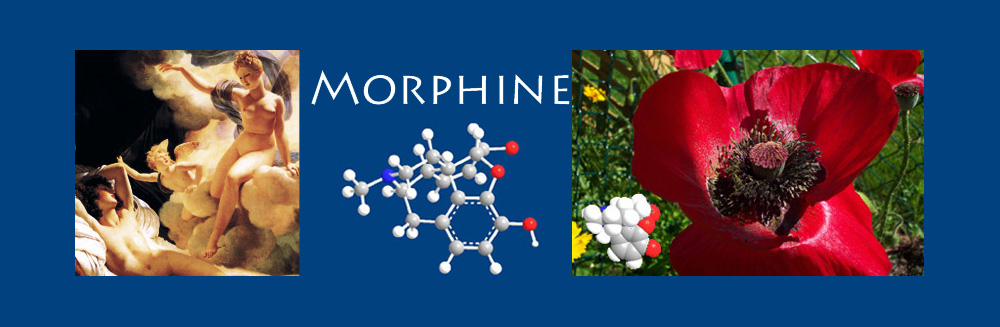
Origin of word " Morphine" from Morphus


The name morphine, a powerful pain-relieving drug, comes from Morpheus, the Greek god of dreams. Though Morpheus was not directly connected to medicine, his association with sleep and dreams inspired the name of this drug.

In Greek mythology, Morpheus was one of the Oneiroi (the gods of dreams) and was the son of Hypnos, the god of sleep. Morpheus had the special ability to appear in people's dreams in any form, often as a human, to deliver messages from the gods. He was believed to control the dreams of kings and heroes, shaping their visions while they slept.

Morpheus' name comes from the Greek word morphē, which means "form" or "shape." This is because he could change his appearance to suit the dreams he created. He lived in a dark, misty land called the Land of Dreams, where poppy flowers grew in abundance.

The drug morphine was discovered in the early 19th century by Friedrich Sertürner, a German pharmacist. He extracted it from opium, a substance obtained from the poppy plant (Papaver somniferum). Since opium and its derivatives cause deep sleep and dream-like states, he named the drug "morphine" after Morpheus, the god of dreams.

Just as Morpheus controlled dreams, morphine controls pain by affecting the brain and nervous system. It helps people sleep peacefully by reducing pain, much like how Morpheus guided people into deep dreams.

The name morphine comes from Morpheus because of the drug’s ability to induce sleep and dream-like sensations. 


Origin of the Word "Europe"

  The name Europe is not just the name of a continent. It comes from one of the most famous stories in Greek mythology-the story of a beauti...